Monday, 25 February 2019

The Morning Star

The Morning Star


Ever felt the burning in eyes while looking upwards? The bright Sun always amaze us in all the seasons.
The heart of our solar system, a yellow dwarf is a ball of gases. It is a nearly perfect sphere consisting of hot plasma. The morning star is the main source of energy for the earth. It has diameter about 1.39 million kilometers which is 109 times that of Earth. The sun is such huge that it has its mass of about 330,000 times that of Earth while it is 99.86% of the total mass of the Solar System.
The Sun is burning now for more than 4.5 billion years providing heat and light to other planets. It has a group of gasses which has a majority of hydrogen consisting of approximate 73% and helium of approx. 25%. The remaining is of other heavier elements, including oxygen, neon, carbon and iron. The Sun's power is about 386 billion billion mega Watts which is produced by nuclear fusion reactions. As it is immensely huge, it has immense gravity to hold the gases together. Besides these gases, its gravity is also used to hold all the planets in the orbit. It generates a magnetic field via a dynamo process. It is carried out in the solar system by the solar wind. It is a gigantic nuclear reactor.
The structure of the Sun has different layers:
·         Core – This is the innermost region
·         Radiative zone –In this layer energy transfer occurs by means of radiation
·         Tachocline – This is the boundary region between the radiative and convective zones
·         Convective zone: Place where convection occurs
·         Photosphere – This is the deepest part of the Sun which we observe with visible light
·         Atmosphere – It is a gaseous surrounding the Sun. 
The outer layers of the Sun exhibit differential rotation. At the equator the surface rotates once every 25.4 days while near the poles it's as much as 36 days. Wondering why is it like this? This differential behavior is because the Sun is not a solid body like the Earth. Also, there is an interaction between the Sun and Earth. No wonder we feel the seasons, ocean currents, weather, climate, radiation belts!


                                                                                                                                  Ketki Kardile

Saturday, 23 February 2019

The Long lived Opportunity!

   The Long lived Opportunity!


Opportunities, who does not love them? Exciting MARS received an Opportunity in the form of Rover to study the planet. NASA had developed a robot in order to study and gather observations, and report back to Earth. It had a life span of 14 years from 2004 to 2018. It landed on MARS on January 25, 2004 three weeks after its twin Rover, Spirit.
Opportunity was designed to work only for just three months but surprisingly it worked for 14 long years while Spirit that was designed for similar life span as of Opportunity was alive for six years covering almost 5 miles. Oppy, the loving name given name to Opportunity was expected to cover for less than a mile over the Martian but it crossed all the expectation and positively lived on MARS for 28 miles.
Opportunity started developing in Eagle crater in 2004, travelling outward making its way to Endurance crater, later entering to Victoria crater. It then traveled to Endeavor crater, from which it made its way south along the Western rim. It made many measurements, completed different studies of rocks and smaller craters as well as panoramas. During its life tenure it transmitted 217,594 images which also including one Selfie. These twins proved the existence of water on MARS.

Rightly said life has two points: Start and an End. On 10th June 2018 MARS faced sever dust storm. This thus led to loss of power required for operations. Three months later the storm cooled down and NASA begun to connect to the child present there. It made all sincere efforts to check if it survived the storm but it failed to receive any signal back. After no response received from the neighboring planet for months, NASA officially declared Mission Opportunity as Complete on 13th February 2019. In this way Oppy was seen on Perseverance Valley, its final resting spot.
These twins provided us with evidences of some of the elements of life on the red planet. The world that is now deserted and lifeless may have some exciting facts hidden.

Sunday, 10 February 2019

Space Photographer


Space Photographer

Rewinding to few years before, Stars would help us know the directions. Today, as we are progressing we have a map in our hand before we start for the journey. Thanks to the Satellites that has made our lives so easy! Satellite is an orbiting object in the space revolving around bigger objects. As the satellites are placed intentionally in an orbit they are known as artificial satellites. Moon is our only natural and permanent satellite. Multiple other natural satellites are present in the solar system.


For other artificial satellites, there is launch vehicle places it into orbit. Satellite is lifted off from a launch pad on land, at sea from a submarine,mobile maritime platform, or aboard a plane. Artificial satellites came into existence in the mid-20th century when the first artificial satellite Sputnik, a Russian space probe was lifted off on Oct. 4, 1957. The International Space Station is the largest man made satellite in orbit.
These are basically computer-controlled systems with four main parts to it:
·         Power system
·         Altitude control
·         Antenna for transmitting and receiving information,
·         Payload for information gathering.

A Satellite's orbit can be an ellipse or a circle that moves around two points known as foci. The planet is located at one of the foci. As a result, the net force applied to the satellite is not uniform around the orbit thus affecting its speed. It moves fastest when it's closest to the planet and slowest when it's farthest from the planet. The point closest to the planet is known as perigee while that when farthest from the planet is apogee.

Satellite subsystems attend many tasks, such as power generation, thermal control, telemetry, attitude control and orbit control. Besides the GPS, satellites are used for many purposes. Several other applications are that they can be used for military observations, communication, for mapping stars and planetary surfaces, to determine the weather. They also take pictures of their respective planets. Satellite can be classified in a number of ways depending on their purpose. Some of them are low Earth orbit, polar orbit, and geostationary orbit, drone satellite, ground satellite, etc.
There have been several Satellites in the space by now. From 2018 estimate, some 4,900 have remained in orbit, out of which about 1,900 were operating. Remaining has become debris.

Ketaki M Kardile


Sunday, 3 February 2019

A dare to dream


                                                           A dare to dream


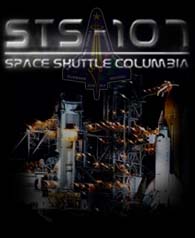
Remember the Space craft details described earlier? One such Space shuttle that flew covering a distance of 10,600,000 km for about for about 15 days, 22 hours, 20 minutes, 32 seconds was the STS-107. It was 113th   and the final flight of the Space Shuttle program Columbia by NASA.

The crew was of seven astronauts who performed nearly 80 experiments in the space. Some among them were studying earth and space science, advanced technology development, and astronaut health and safety. Besides this, some experiments related to daily human life were also performed. Testing flowers was one. They discovered that flowers in space develop an aroma, quite distinct from their fragrance on Earth. Two flowers: a rose and an Asian rice flower for testing. But their fragrance never did reach the Earth.
On completing the experiments, they started their travel back. But while entering the earth’s atmosphere led an unfortunate and irreparable damage to the space craft and mankind both on February 1 2003. On investigation of failure, it was determined to have been caused by a piece of foam that broke off during launch and damaged the thermal protection system on the leading edge of the left wing.
Amongst the crew was our first Indian Woman to enter the space: Kalpana Chawla. She had an imagination and the dare to dream.
An Aeronautical Engineer who was born and brought up in India, moved to the United States in 1982 and obtained a Master of Science degree in Aerospace Engineering from the University of Texas at Arlington in 1984. Post this she earned a doctorate in aerospace engineering from the University of Colorado in 1988.
She completed two space missions during her journey in NASA.  In the initial mission of STS-87, Kalpana traveled over 16737177.6 kilometers in 252 orbits of the earth. She was for more than 15 Days and 12 Hours in the space. On January 16, 2003, she returned to space aboard Space Shuttle Columbia on the ill-fated STS-107 mission where she went on eternal rest while entering the earth.
She is the first Indian woman to enter space. She managed to overcome all the difficulties and fulfill her dream being an inspiration to everyone to chase their imagination and conquer! Several recognitions were given later in her remembrance.  
We pay a humble tribute to Kalpana: the creative and powerful soul.

ketaki kardile

Sunday, 27 January 2019

Illuminating Spheroids


Twinkle Twinkle little star, how I wonder what you are????
Ever imagined what a Star is after high school?
Well it’s a fixed luminous point in the night sky that shines brightly miles away. These huge giant spheres are made up of very hot gases. These gases are mostly hydrogen and helium. These lustrous elements shine by fusing hydrogen into helium. Miles away from the earth, Stars appear to be so small. But actually they are much bigger than the Sun itself. Many stars also come in pairs called binary stars.
The life cycle of stars can be classified into 4 parts:
·         Birth
·         Main sequence
·         Red Giant
·         Collapse phase
The formation of a star begins with gravitational instability within a molecular cloud. Gravity forces the dust to come together. When more and more dust bunches up, gravity gets stronger.Thus increasing the temperature becoming and a protostar. Once the center has sufficient amount of heat, nuclear fusion will begin and a young star is born.The star in its youth (less than 10 million years old) is known as a Tauri star while those with greater mass are Herbig stars. The newly formed stars emit jets of superheated gases along their axis of rotation.
Stars spend about 90% of their existence fusing hydrogen into helium in high-temperature and high-pressure. Stars in this phase are said to be on the main sequence, and are called Dwarf stars. Our Sun, the closest star to the earth is also a dwarf star which is 4.5 billion years old. The time a star spends on the main sequence depends primarily on the amount of fuel it has and the rate at which it burns it. As stars exhaust their supply of hydrogen at their core, they start to fuse hydrogen from a shell outside the helium core.  This is when they are converted into Red Giants. Their outer layers expand and cool in this phase. Eventually the core of the star will start to make ions. This will cause the star to Collapse. The future of the star is depended upon its size. The average star will become a white dwarf star while the larger stars will create a huge nuclear explosion called a supernova.
Stars are not scattered randomly through space. They are gathered together into vast groups known as Galaxies. There are about 10 billion galaxies which can be observed. The number of stars in a galaxy on an average is 100 billion. This makes a huge count of Shiners altogether.
The largest star that we know of is called VY CanisMajoris while the smallest known star right now is OGLE-TR-122b, a red dwarf star that's part of a binary stellar system. 
Amazing right? Keep Shining and following, the stars and us!


Ketaki Kardile

Sunday, 20 January 2019

ISRO for Students


This New Year has come up with a new set of knowledge, opportunities and exposure. Here comes a new opportunity for the youth of India to launch a satellite. In order to encourage scientific talent, The Indian Space Research Organisation (ISRO) has come up with Young Scientist Programme.
This is going to be the most awaited opportunity for our blossoming minds who want to explore themselves in space research. Three students from each of the 29 states, and 7 union territories will be selected for this programme. So students, gear up with your science projects as the selection of the candidate will be based on it. Mostly the 8th standard passed out students will be eligible for this programme.
They will be given lectures, R&D lab experiments and practical experience of building a small satellite. Excitingly, if these satellites satisfy the quality requirements, they will be launched.
 In addition to this all expenses for this programme will be taken care of by ISRO. The application process for the project is expected to begin in March.
ISRO has also supported the student-built satellite called Kalamsat, named after Dr APJ Abdul Kalam. PSLVC44, a new variant of PSLV, will be used to carry Kalamsat. Apart from launching the Satellite, this new variant of the PSLV will also provide a stage to perform multiple experiments in space. This success will hence create first such platform in the world.
By now, there are nine student satellites launched.  Also ISRO has planned to set up six incubation centres and six research centres to help young scientists of India, explore the space. For details of these student satellites do visit:  https://www.isro.gov.in/spacecraft/list-of-university-academic-institute-satellites
The vision to develop young minds seen by our distinguished scientist and former President of India is honoured. 


Ketaki Kardile

Sunday, 13 January 2019

Space Craft


Space crafts, an orbital vehicle in the space for research, communication, transportation etc. Depending upon the purpose there are three types of space crafts classified as:
  • ·         Crewed space craft
  • ·         Space planes
  • ·         Unmanned space crafts

With constant progress in astronomy, Crewed Space Crafts is an important project all around the globe. On the occasion of Independence Day, our beloved Prime Minister announced our first Crewed mission by ISRO:  Gangayaan, India’s first manned Space Mission.
It started in 2006, which took couple of years to finalize the design. This will be a Crewed Space craft with 3 people on-board. The journey is planned for the duration for 7 days to reach the orbit and safely return to the Earth. While the testing is in process, it will have two test flights, in December 2020 and June 2022 respectively. The final crewed flight is expected to take off by December 2022, thus marking India the 4th Nation in the world to send crewed Space crafts after Russia, USA and China.
This 3.7 tons spacecraft having 16 minutes of liftoff time will be taking off from Sriharikota and will be into the orbit 300 to 400 Kilometer above the earth surface. Such an excitement!
Well sending a spacecraft isn’t everything about how to develop and launch. While sending a human force, there are different parameters that need to be taken care off like the environment control, life support, emergency escape etc. Different areas of engineering including aeronautics, mechanics, communication, information technology, thermal, electrical, etc. are involved marking a multi-functional project.

It includes Attitude Determination and Control for the altitudes control, the

Telemetry, tracking, and command (TT&C) used for communication between spacecraft and the ground systems.  Communication on board Spacecrafts takes place using radio antennas which is known as satellite communication while few spacecraft communicate using lasers. Also it has different Source for Power Generation and Propulsion for the thrust.
No wonder why rocket science is associated with the most difficult tasks around the world!
For more interesting facts and information do visit us every Sunday on https://astroninorg.blogspot.com/